
What is Electronic Invoicing (e-Invoicing)?
Electronic Invoicing in the UAE is not merely the creation of a digital file. It is a mandatory, structured process for the issuance, transmission, and exchange of invoices and credit notes between suppliers and buyers, and their subsequent reporting to the Federal Tax Authority (FTA).
Unlike traditional invoicing where a PDF or paper invoice is sent via email or post, the UAE e-Invoicing system utilizes a 5-Corner Model to ensure security, interoperability, and near real-time tax reporting:
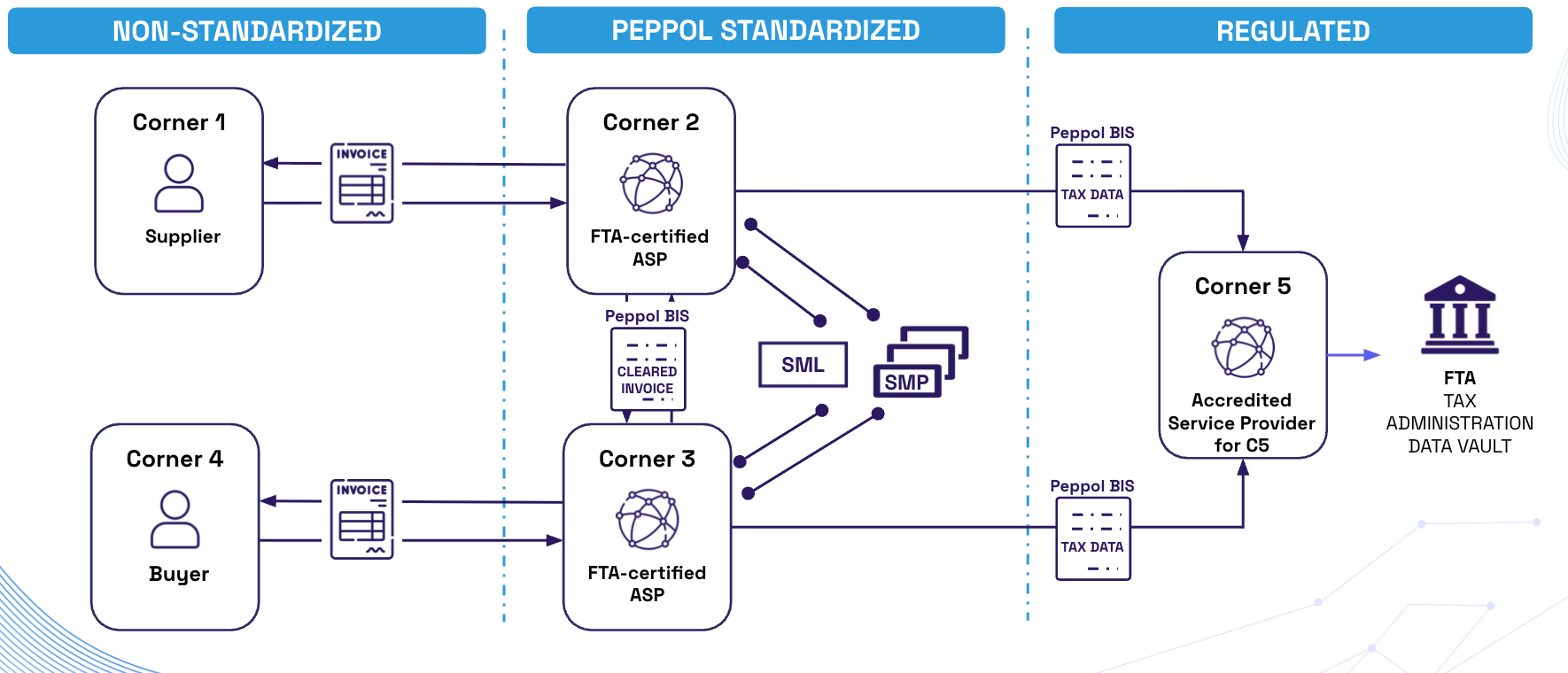
Corner 1 (Supplier): The business issuing the invoice.
Corner 2 (Supplier's ASP): The Accredited Service Provider that validates the data and transmits it to the Peppol network.
Corner 3 (Recipient's ASP): The Accredited Service Provider that receives the data for the buyer.
Corner 4 (Recipient/Buyer): The business receiving the invoice.
Corner 5 (FTA): The Federal Tax Authority, which receives the Tax Data for compliance and auditing.
Key Characteristics
Structured Data (XML): Invoices must be generated in a specific XML format, enabling automated and machine-readable processing.
Interoperability: The system leverages the Peppol Interoperability Framework, ensuring that different systems can communicate seamlessly regardless of the software used by the supplier or buyer.
Mandatory Compliance: Implementation is mandatory for all Persons conducting business in the UAE, regardless of their VAT registration status.
Legal Standing: Electronic Invoices and Credit Notes issued through this system are the primary, legally recognized documents for tax purposes.
Why It Matters for Businesses
Adopting this system is not optional. It is a critical shift in the UAE's fiscal infrastructure designed to:
Minimize Tax Gaps: Combat the shadow economy through near real-time data visibility.
Reduce Errors: Standardized formats minimize data entry disputes and processing times.
Enhance Audits: Streamline compliance and improve the efficiency of tax audits.